
Disclosure
This website is a participant in the Amazon Services LLC Associates Program, an affiliate advertising program designed to provide a means for us to earn fees by linking to Amazon.com and affiliated sites.
Is your adjustable bed making a loud noise when adjusting? This common issue is often caused by mechanical strain or loose components. Don’t let disruptive sounds ruin your comfort and sleep.
This complete guide provides proven methods to diagnose and fix the problem yourself. You’ll learn to identify specific sounds and their likely sources quickly.
Best Adjustable Bed Bases for Quiet Operation
If your current bed is beyond repair, investing in a quiet-adjustment base is the ultimate solution. We’ve compared top models known for their smooth, low-noise performance to help you find the best replacement.
Acidbolt Adjustable Bed Frame – Best Overall Quiet Base
The Acidbolt Adjustable Bed Frame features a near-silent brushless motor system designed for minimal operational noise. Its robust, all-metal frame construction prevents squeaks and rattles. This is the ideal choice for light sleepers who prioritize whisper-quiet adjustments and premium build quality.

- 🛌 Five-Zone Massage Therapy: Unwind with five customizable massage modes and…
- 🛌 Guided Nighttime Convenience: Navigate safely in the dark with the…
- 🛌 Dual-Port Charging Hub: Stay connected with both Type-A and Type-C USB…
iDealBed 5i Custom Adjustable Bed base – Best for Smart, Quiet Adjustments
iDealBed 5i Custom Adjustable Bed base uses a smooth-glide articulation system that reduces mechanical grinding sounds. Its integrated smart home compatibility allows for quiet, scheduled position changes. This model is recommended for tech-savvy users seeking a seamless and quiet smart bed experience.
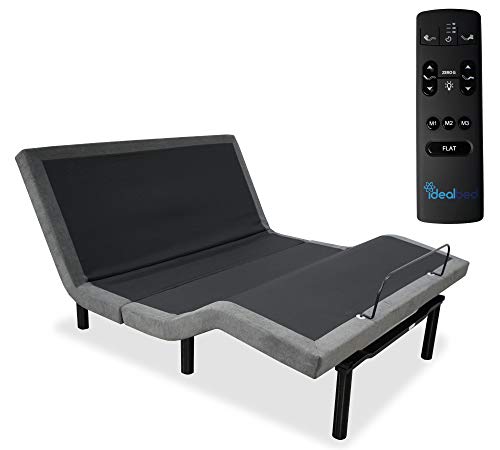
- Enhance your comfort and sleep with full head and foot articulation the Head…
- Luxurious Interactive Wireless Ergonomic Remote, Back-Lit and marked function…
- Advanced Smooth and Silent Drive Technology Motors, German engineered motors to…
Reverie R650 – Best Value Quiet Performance
The Reverie R650 offers excellent quiet operation with its dual ultra-quiet motors and a solid, rattle-free wooden slat system. It provides powerful lift at a more accessible price point. This is the best option for those seeking reliable, quiet functionality without the premium brand price tag.

- This is Reverie’s latest model (R650) featuring the best tech in the industry…
Common Causes of a Noisy Adjustable Bed Frame
A noisy adjustable bed can stem from several mechanical issues. Identifying the specific sound is the first step to a quiet fix. Different noises point to different underlying problems.
Diagnosing Grinding or Whirring Motor Sounds
Grinding or loud whirring often originates from the bed’s motor or drive system. This indicates strain or wear on internal components. It’s a critical issue that needs prompt attention.
- Motor Overload: The motor may be straining if the frame is supporting excess weight beyond its capacity, causing a labored, grinding sound.
- Worn Gears/Bearings: Internal gears or bearings can wear down over time, creating a persistent metallic grinding noise during movement.
- Electrical Issues: A failing power supply or controller can cause the motor to operate erratically, resulting in unusual whirring or buzzing.
Fixing Squeaks, Creaks, and Rattling Noises
Squeaks and rattles are typically caused by friction between moving parts. These are often the easiest issues to diagnose and fix yourself. The source is usually in the frame joints or hardware.
Summary of Common Squeak Sources:
| Noise Type | Likely Source | Quick Check |
|---|---|---|
| High-Pitched Squeak | Metal-on-metal joint friction | Check pivot points and hinges |
| Wooden Creak | Rubbing between wooden slats/frame | Inspect slat alignment and contact points |
| Persistent Rattle | Loose bolts, screws, or brackets | Tighten all visible fasteners with a wrench |
Addressing Clicking or Popping During Adjustment
Clicking or popping sounds can be alarming. They often occur when parts shift suddenly under tension. This is frequently related to the frame’s articulation mechanism.
- Joint Tension Release: Popping may happen when a stiff joint finally moves, releasing built-up tension in the frame.
- Plastic Component Failure: A broken plastic cable guide or connector can snap and cause a repetitive clicking sound.
- Wire Harness Issue: Loose wiring in the harness can tap against the frame as the bed moves, creating a clicking noise.
Step-by-Step Guide to Fix a Noisy Adjustable Bed
Many common noise issues can be resolved with basic tools and careful troubleshooting. Follow this systematic guide to silence your bed. Always unplug the bed from power before beginning any repair.
Initial Inspection and Safety Precautions
Start with a thorough visual and auditory inspection. This helps pinpoint the exact source before disassembling anything. Safety is paramount when dealing with electrical and mechanical components.
- Unplug the Bed: Disconnect the power cord from the wall outlet to eliminate any electrical hazard.
- Clear the Area: Remove all bedding, mattresses, and any stored items from under the frame for full access.
- Identify the Sound: Have a helper operate the remote while you listen closely to locate the noise origin.
DIY Solutions for Common Noise Problems
Most squeaks and rattles have simple, effective DIY fixes. These solutions require minimal tools and technical skill. They address the most frequent friction and looseness issues.
Quick Fix Toolkit:
- Socket Wrench Set: For tightening all frame bolts, nuts, and pivot point hardware.
- Silicone-Based Lubricant: Apply to metal joints and hinges to eliminate squeaks from friction. Avoid oil-based products.
- Felt Pads or Rubber Washers: Place between wooden slats or at contact points to prevent creaking and rattling.
When to Call a Professional Technician
Some problems exceed safe DIY repair scope. Recognizing these situations prevents further damage or personal injury. Professional service ensures a correct and lasting fix.
- Motor or Drive Failure: If the grinding noise persists after basic checks, the internal motor or gearbox may need replacement.
- Electrical Faults: Any burning smell, sparking, or remote control failure requires immediate professional diagnosis.
- Structural Frame Damage: Visible cracks, bends, or broken welds in the metal frame compromise safety and need expert repair.
Preventative Maintenance to Keep Your Bed Quiet
Regular maintenance prevents noise issues before they start. A simple care routine extends your adjustable bed’s lifespan. Proactive care is easier and cheaper than reactive repairs.
Monthly and Quarterly Maintenance Checklist
Incorporate these tasks into your regular home maintenance schedule. Consistent checks keep small issues from becoming big, noisy problems. This checklist takes only minutes to complete.
- Monthly: Tighten all visible bolts and screws with a wrench. Listen for new sounds during a full adjustment cycle.
- Quarterly: Inspect pivot points and apply silicone lubricant to metal joints. Check for wear on slats and electrical cords.
- Bi-Annually: Vacuum under the frame to remove dust and debris. Verify the remote batteries are fresh to prevent motor strain.
Proper Lubrication for Moving Parts
Using the correct lubricant is crucial for quiet operation. The wrong product can attract grime or damage components. Follow this guide for safe and effective lubrication.
Lubrication Do’s and Don’ts:
| Do Use | Don’t Use | Application Points |
|---|---|---|
| Silicone Spray | WD-40 (as lubricant) | Metal hinges, pivot joints |
| Dry Graphite Powder | Grease or Oil | Plastic gears, sliding tracks |
| Paraffin Wax | 3-in-1 Household Oil | Wood-on-wood contact areas |
Weight Capacity and Usage Best Practices
Exceeding your bed’s limits is a primary cause of motor noise and frame stress. Proper use ensures smooth, quiet performance for years. Follow these guidelines for optimal operation.
- Know Your Limit: Never exceed the manufacturer’s stated weight capacity, which includes mattress, bedding, and occupants.
- Avoid Sudden Movements: Use the remote in smooth, deliberate presses instead of rapid, repeated commands that strain the motor.
- Balance the Load: Ensure weight is distributed evenly across the frame to prevent uneven stress on one motor or joint.
Warranty and Professional Repair Options
When DIY fixes fail, understanding your warranty and repair options is essential. This can save significant money and ensure a proper, lasting solution. Know your rights and the available service pathways.
How to Check and Use Your Adjustable Bed Warranty
Most adjustable beds come with a multi-year warranty covering specific components. The coverage details are crucial for getting free repairs. Follow these steps to utilize your warranty effectively.
- Locate Your Documentation: Find your original sales receipt and warranty booklet. Check the manufacturer’s website if documents are lost.
- Understand Coverage Terms: Warranties typically cover motors and frame defects but exclude noises from normal wear or improper use.
- Contact the Retailer or Manufacturer: Initiate a claim with your proof of purchase. Describe the noise issue precisely for faster service.
Choosing Between Manufacturer and Third-Party Repair
If your warranty has expired, you must choose a repair service. Each option has distinct advantages and potential drawbacks. Consider cost, expertise, and convenience.
Repair Service Comparison:
| Service Type | Pros | Cons |
|---|---|---|
| Manufacturer-Authorized | Genuine parts, certified technicians, may honor warranty | Often more expensive, potentially longer wait times |
| Local Third-Party | Faster service, possibly lower cost, supports local business | May use aftermarket parts, expertise varies by brand |
| Furniture Repair Specialist | Good for frame/squeak issues, broad mechanical knowledge | May lack specific motor/electrical expertise for your model |
Cost Expectations for Common Noise Repairs
Repair costs vary widely based on the issue and service provider. Getting an estimate before authorizing work is important. Here are typical price ranges for common fixes.
- Motor Replacement: This is the most expensive repair, typically ranging from $300 to $800+, including parts and labor.
- Frame Joint/Bracket Repair: Fixing squeaks or tightening a loose frame usually costs between $100 and $250 for a service call.
- Remote/Control Box Diagnosis: Troubleshooting electrical issues often has a flat fee of $75-$150, plus parts if replacement is needed.
Troubleshooting Specific Noise Scenarios
Some noises occur only in specific situations. Targeted troubleshooting can quickly resolve these scenario-based issues. Match your exact problem to the solution below.
Noise Only When Raising the Head or Foot Section
If noise is isolated to one movement direction, the issue is likely in that specific motor or articulation arm. This points to a localized problem rather than a general frame issue. Focus your inspection on the noisy section’s mechanics.
- Check the Actuator Arm: Inspect the metal arm that lifts the section for obstructions, bends, or loose connections at the pivot points.
- Inspect Section-Specific Wiring: The wiring harness for that motor may be pinched or rubbing against the frame only during movement.
- Test Motor Independently: If possible, operate only the noisy section repeatedly to confirm the sound is isolated and not a balance issue.
Loud Noise When First Turning On or Stopping
A sudden bang or grind at startup or shutdown often indicates a mechanical “jump.” This happens when components under tension suddenly engage or release. It’s commonly related to the drive system.
Key Takeaways for Startup/Stopping Noises:
| Noise Timing | Probable Cause | Immediate Action |
|---|---|---|
| Loud “Bang” at Start | Excessive slack in drive chain/belt | Check belt tension and sprocket alignment |
| Grinding at Stop | Failing motor brake or clutch | Avoid using that position; schedule professional service |
| Click then Silence | Relay engaging in power supply box | Normal for some models; monitor for increase in sound |
Intermittent Noise That Comes and Goes
An inconsistent noise is often the most frustrating to diagnose. It usually points to a component that moves in and out of alignment or contact. The key is to identify the pattern.
- Temperature/Humidity Link: Wooden components or certain lubricants can expand/contract with room conditions, causing periodic creaking.
- Weight-Dependent Sounds: A noise that only occurs with two people indicates a joint or slat that flexes under higher, specific loads.
- Position-Specific: If the noise happens only at a certain angle, a component is likely making contact only in that precise configuration.
Mattress Compatibility and Noise Prevention
Your mattress can be a hidden source of adjustable bed noise. An incompatible mattress creates friction and strain. Ensuring proper synergy between bed and mattress is key for silent operation.
How Your Mattress Type Affects Bed Noise
Different mattress materials and constructions interact uniquely with a moving frame. The wrong combination can cause squeaking, binding, and extra motor strain. Choose a mattress designed for flexibility.
- Memory Foam/Latex: These are ideal as they flex easily without internal spring noise. Ensure they are specifically labeled as adjustable-base compatible.
- Innerspring/Hybrid: Can be problematic. Look for models with flexible, pocketed coils and reinforced edges to prevent sagging and squeaking on the bend.
- Airbed: Generally very compatible, but ensure the air chambers and hoses have enough slack to avoid tension or pinching during articulation.
Using a Mattress Flex Board or Glider
A flex board is a simple, effective solution for mattress-related noise. It creates a smooth, solid surface between your mattress and the moving frame. This accessory solves several common issues.
Benefits of a Mattress Flex Board:
| Problem Solved | How the Flex Board Helps | Best For |
|---|---|---|
| Mattress Squeaking | Eliminates direct friction between mattress coils and bed slats | Innerspring and hybrid mattresses |
| Poor Bending Support | Provides uniform support, preventing mattress “hammocking” | Older or non-flexible mattresses |
| Slat Rattle | Creates a solid barrier, stopping wooden slats from shifting and tapping | Any bed with a slatted base |
Ensuring Proper Mattress Alignment and Support
Incorrect mattress placement is a frequent cause of noise and motor overload. A misaligned mattress forces the frame to work harder. Follow these steps for perfect alignment.
- Center the Mattress: Ensure the mattress is perfectly centered on the base with equal overhang on all sides.
- Check for Bunching: Smooth out all mattress pads, protectors, and sheets to prevent fabric from catching in the hinge.
- Verify Full Support: The entire mattress bottom must be supported by the base or flex board, with no unsupported gaps.
Advanced Diagnostics and When to Replace
Some noise issues require deeper investigation to determine the root cause. Advanced diagnostics help you decide between a major repair or a full replacement. This decision impacts your long-term comfort and cost.
Using a Stethoscope for Precision Sound Location
A mechanic’s stethoscope is a powerful, low-cost tool for isolating elusive noises. It amplifies internal sounds, letting you pinpoint the exact component at fault. This method provides professional-level diagnosis at home.
- Acquire the Tool: Purchase an inexpensive automotive mechanic’s stethoscope from any auto parts store or online retailer.
- Systematic Probe: With the bed unplugged, touch the probe to different areas—motor housings, joint brackets, the center hinge—while an assistant operates the remote.
- Identify the Epicenter: The sound will be loudest and clearest at its true source, distinguishing a motor grind from a nearby bracket rattle.
Signs Your Adjustable Bed Frame Needs Replacement
Not all beds are worth repairing. Persistent issues after multiple fixes indicate systemic failure. Recognize these signs to avoid throwing good money after bad.
Red Flags for Replacement:
| Sign | What It Indicates | Action |
|---|---|---|
| Multiple Motor Failures | Underlying electrical or design flaw | Replace the entire base |
| Chronic Frame Bending/Warping | Structural integrity is compromised | Replace for safety reasons |
| Cost of Repair > 50% of New Price | Poor economic value in fixing | Invest in a new, quieter model |
Evaluating Repair vs. Replacement Cost-Benefit
Make a data-driven decision by comparing all factors. Consider more than just the immediate repair quote. Long-term reliability and new features are significant benefits of replacement.
- Calculate Total Cost of Repair: Include parts, labor, potential future related repairs, and your personal time and hassle.
- Consider Age and Technology: A bed over 7-10 years old likely lacks modern quiet motors and may have obsolete parts.
- Factor in New Features: Replacing may offer worthwhile upgrades like wireless charging, zero-gravity presets, or enhanced massage, improving overall value.
Conclusion: Achieving a Quiet and Peaceful Adjustable Bed
A noisy adjustable bed is a common but solvable problem. You can diagnose and fix most issues by understanding the causes. Regular maintenance prevents future disruptions to your sleep.
The key takeaway is to start with simple DIY checks before assuming a major failure. Tighten hardware, apply proper lubricant, and ensure mattress compatibility. These steps resolve many complaints quickly.
If noises persist, consult your warranty or a trusted professional. Investing in a quality repair or a new, quiet base is an investment in long-term rest. Enjoy the full, silent comfort your adjustable bed is designed to provide.
Frequently Asked Questions About Noisy Adjustable Beds
What is the most common cause of a squeaky adjustable bed?
The most common cause is friction between metal parts or loose hardware. Pivot points, hinge joints, and bolts can loosen over time, creating squeaks and rattles. Regular movement without lubrication accelerates this wear.
Simple fixes often resolve this. Tightening all visible bolts with a wrench and applying a silicone-based lubricant to metal joints usually eliminates the noise. Check these points before assuming a motor problem.
How to lubricate an adjustable bed frame properly?
First, unplug the bed and clear the area. Use a silicone spray or dry lubricant specifically designed for metal and plastic components. Avoid oil-based products like WD-40, which attract dust.
Apply lubricant sparingly to all moving joints, pivot points, and the center hinge. Wipe away any excess to prevent drips. Operate the bed through its full range to work the lubricant into the mechanisms.
Why is my adjustable bed making a loud grinding noise?
A loud grinding noise typically indicates a problem with the motor or drive system. The motor may be overloaded, or internal gears and bearings could be worn out. This sound suggests significant mechanical strain.
This issue often requires professional attention. Stop using the bed in the position that causes the grind and check your warranty. Continuing to use it can lead to complete motor failure.
Can a mattress cause an adjustable base to make noise?
Yes, an incompatible mattress is a frequent culprit. Traditional innerspring mattresses can squeak as coils rub together when bent. A mattress that is too rigid may also strain the motor.
Ensure your mattress is labeled as “adjustable base compatible.” Using a mattress flex board can provide a solid, quiet interface between a problematic mattress and the moving frame.
What should I do if my new adjustable bed is noisy?
First, contact the retailer or manufacturer immediately. A new bed should operate quietly, and noise may indicate a manufacturing defect or shipping damage. This is almost always covered under warranty.
Document the noise with a video to show customer service. Avoid attempting DIY repairs on a new bed, as this could void your warranty. Request a service visit or replacement.
Is it normal for an adjustable bed to make some sound?
A very faint hum or whir from the motor is normal. However, loud grinding, persistent squeaking, or knocking is not. The bed should adjust smoothly without disruptive noises that disturb sleep.
Trust your judgment. If the sound is noticeable and annoying, it likely indicates an issue that should be addressed. Quiet operation is a key feature of a quality adjustable base.
How much does it cost to fix a noisy adjustable bed motor?
Motor replacement is the most expensive repair, typically costing between $300 and $800+, including parts and labor. The exact price depends on your bed’s brand, model, and service provider.
Always get a detailed estimate first. Compare this cost to the price of a new base, especially if your bed is older. Sometimes, replacement is more cost-effective than a major repair.
What is the best way to prevent future adjustable bed noise?
The best prevention is a consistent maintenance routine. Every three months, tighten all frame bolts and inspect moving parts. Use the correct lubricant on joints annually to prevent friction-based squeaks.
Also, respect the weight capacity and ensure proper mattress compatibility. Proactive care is far simpler and cheaper than diagnosing and fixing a noise problem after it starts.