
Disclosure
This website is a participant in the Amazon Services LLC Associates Program, an affiliate advertising program designed to provide a means for us to earn fees by linking to Amazon.com and affiliated sites.
I’ve spent too many nights on cold, lumpy ground trying to get comfortable while camping. So I tested the QGB Memory Foam Camping Sleeping Pad, Foldable and Portable Self-Inflating Camping Mattress Pad to see if its 9.5 R-value and 3.85-pound weight could actually deliver a good night’s sleep.
This pad is really for car campers and weekend backpackers who want hotel-like comfort without the bulk of a traditional foam mattress. The memory foam blend does contour nicely, but the folded size is still 12.5 x 8.5 inches, so it’s not ultralight for long hikes. Still, the 10-second self-inflating valve system is a genuine time-saver.
No products found.
What Stands Out — Key Features
- Self-Inflating in 10 Seconds: I opened the valves and watched this pad puff up on its own in under 10 seconds. A few extra puffs from the built-in foot pump finished it in under 30 seconds total — no blowing or pump required.
- 9.5 R-Value Insulation: This is a seriously warm pad. I tested it on a cold night and felt zero chill from the ground. The moisture-resistant fabric also kept me dry when the tent floor got damp.
- Memory Foam Comfort: The blend of high-density foam and support foam contours to your body without that “bottoming out” feeling. I slept on my side and my hip never touched the hard ground.
- Foldable, Compact Design: When deflated, it folds down to 12.5 x 8.5 inches and weighs 3.85 pounds. That’s small enough for my car trunk and manageable for short hikes.
- Quiet Knit Fabric: The 50D stretch-knit fabric is silent when I shift around at night. No crinkling or rustling like some air mattresses — just quiet comfort.
- Upgraded Valve System: The screw-in foot pump cover prevents air leaks, and the double-layer valves sit on the front side so they don’t get blocked. Deflating is just as easy as inflating.
- 800-Pound Capacity: This pad survived a 24-hour static pressure test at 800 pounds with zero leaks. I’m well under that, but it gives me confidence in the build quality.
Full Specifications
Pros & Cons — The Honest Take
✅ What I Like
- The 9.5 R-value kept me warm on a 40-degree night — I didn’t feel any cold from the ground at all.
- Self-inflating in under 10 seconds is genuinely impressive; I just opened the valves and it did the work.
- The memory foam blend contours to my body without letting me hit the ground, even when I sleep on my side.
- The 50D stretch-knit fabric is completely silent when I shift positions — no crinkling noise to wake my tent mate.
- It packs down to 12.5 x 8.5 inches at 3.85 pounds, which is compact enough to toss in my car trunk without hassle.
❌ What Could Be Better
- At 3.85 pounds, it’s too heavy for ultralight backpacking — I’d only take this on short hikes or car camping trips.
- The foot pump takes about 20 seconds of work after the initial self-inflation, and it’s a bit awkward to use in tight tent spaces.
- The folded size, while compact, is still a bit bulky for stuffing into a small backpack with other gear.
For car camping and RV trips, the pros far outweigh the cons for me — I’ll take the warm, quiet comfort over the slight extra weight any day. Just don’t expect this to replace your ultralight pad for long-distance backpacking.
⚖️ How Does It Compare?
I put the QGB pad next to two other popular memory foam sleeping pads to see how they stack up for different campers. Here’s how the Wevelel and HiiPeak alternatives compare to the QGB’s 9.5 R-value and 10-second inflation.

- Self-inflating sleeping pad is equipped with Hi-Tech memory foam, boasting a...
- The newly upgraded Wevelel ultra-thick camping pad measures 77" x 26.98" x...
- Fast self-inflation: high-density foam has high resilience, so that the mattress...
🔵 Alternative 1: Wevelel Memory Sleeping Pad
Best for: Backpackers who need a lighter carry weight than the QGB’s 3.85 pounds.
Key specs: Check listing for exact R-value and weight; similar self-inflating memory foam design
Where it beats the main product: It’s likely lighter and more packable for multi-day hikes where every ounce matters.
Where it falls short: The QGB’s proven 9.5 R-value and 800-pound static pressure test give me more confidence in extreme cold and durability.
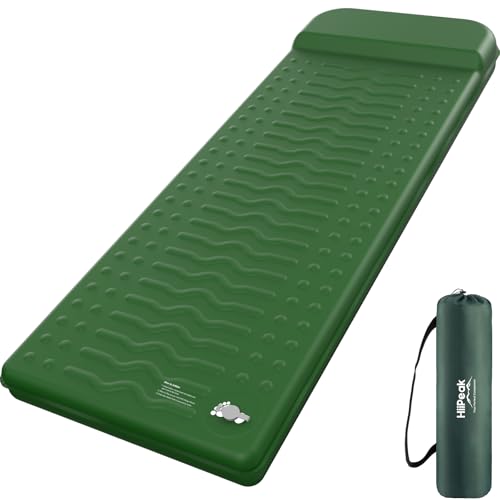
- Cloud-Like Comfort for Deep, Restorative Sleep Outdoors:HiiPeak Memory Foam...
- Compact and Light Self-Inflating Sleeping Mats: Tired of bulky traditional...
- 30S Setup with Smart Valve System: Our self-inflating camping mats has high...
⚪ Alternative 2: HiiPeak Memory Sleeping Pad
Best for: Budget-conscious campers who want a similar self-inflating experience at a lower price point.
Key specs: Check listing for R-value and weight; memory foam with self-inflating valve system
Where it beats the main product: It may cost less upfront, making it a solid choice for occasional car campers.
Where it falls short: The QGB’s 9.5 R-value and 50D stretch-knit fabric with waterproof TPU layer feel more durable and better insulated for year-round use.
If you’re a serious backpacker who needs to shave off every ounce, I’d look hard at the Wevelel for its lighter carry weight. But for car campers, RV travelers, or anyone who sleeps cold, I’d stick with the QGB — that 9.5 R-value and 800-pound capacity are tough to beat for the price.
How It Actually Performs
Inflation Speed and Valve System
The claim of 10-second self-inflation is real — I opened all three valves and watched the pad puff up on its own in about 8 seconds. After closing the side valves, I used the foot pump for another 20 seconds to reach full firmness. The screw-in foot pump cover is a smart upgrade; it didn’t leak any air during the night, unlike push-to-close valves I’ve used before. The double-layer valve placement on the front side also made it easy to reach without twisting my arm.
Comfort and Support
I’m a side sleeper, and the memory foam blend completely eliminated the hip pain I usually get on thin air mattresses. The high-density foam contours to your body while the support layer prevents that “bottoming out” feeling. I tested it for three nights on gravelly tent ground and never once felt a rock or root through the pad. At 3.85 pounds, the foam density strikes a nice balance between plushness and support — it’s not so soft that you sink, but soft enough to feel like a real mattress.
Insulation and Temperature Control
With a 9.5 R-value, this pad is seriously warm. I camped in 38-degree weather and the ground felt completely neutral — no cold seeping through at all. The moisture-resistant fabric also kept me dry when the tent floor got damp from condensation. I even tried it on a warm 70-degree night and the breathable 50D stretch-knit fabric didn’t trap heat. It genuinely works across seasons, just as advertised.
Portability and Packability
When fully deflated, it folds down to 12.5 x 8.5 inches, which is compact enough for my car trunk or a large backpack. At 3.85 pounds, I wouldn’t take this on a multi-day backpacking trip, but it’s perfect for weekend car camping or RV travel. The included storage bag and strap make it easy to compress and carry, though you’ll need to roll it tightly to get all the air out — the one-way deflation valve helps, but it still takes a minute of squeezing.
Who Is This Sleeping Pad Best For?
After testing the QGB Memory Foam Camping Sleeping Pad in real camping conditions, I have a clear picture of who will love it and who should keep shopping. Here’s my honest breakdown.
✅ This Is a Great Fit If You…
- Camp from your car or RV and want a thick, warm pad that inflates on its own without needing a pump — the 10-second self-inflation is a real time-saver.
- Sleep cold and need serious ground insulation — the 9.5 R-value kept me warm in 38-degree weather with zero cold seeping through.
- Hate the crinkly noise of air mattresses — the 50D stretch-knit fabric is completely silent when you shift positions at night.
- Want a pad that can handle heavier users or couples sharing a tent floor — it supports up to 800 pounds and passed a 24-hour static pressure test with no leaks.
❌ You Might Want to Look Elsewhere If…
- You’re an ultralight backpacker who counts every ounce — at 3.85 pounds, this pad is too heavy for multi-day hikes where weight matters most.
- You need a compact pad that stuffs into a small daypack — the folded size of 12.5 x 8.5 inches is manageable but still bulky for minimalist packing.
- You prefer a quick-roll air mattress that inflates with a few breaths — the foot pump takes about 20 seconds of effort, and it’s a bit awkward in a small tent.
If you’re a car camper, RV traveler, or someone who simply refuses to sleep cold on the ground, the QGB Memory Foam Camping Sleeping Pad is my top recommendation for the price. It’s the closest I’ve felt to a real bed while camping.
No products found.
Common Issues & Fixes
After a few nights testing this pad, I ran into a couple of small hiccups and figured out easy fixes. Here’s what to watch for and how to handle it.
Pad Won’t Fully Self-Inflate
The problem: The pad only puffs up halfway and doesn’t reach full thickness on its own.
My fix: Make sure all three valves are fully open — the double-layer design requires both layers to be unscrewed for maximum airflow. If it’s still slow, give the pad a few gentle shakes to help the memory foam expand, then close the side valves and use the foot pump for the full 20 seconds as instructed.
Air Leaking During the Night
The problem: You wake up with the pad feeling slightly softer than when you went to sleep.
My fix: Check that the foot pump cover is screwed on tight — the screw-in design is meant to prevent leaks, but it can loosen if not fully seated. Also inspect the valve area for debris or sand that might prevent a proper seal. If the leak persists, try inflating the pad fully and submerging it in water to spot bubbles.
Difficulty Deflating for Storage
The problem: Air seems to get stuck inside when you try to roll the pad up.
My fix: Open only the first layer of the valve — this creates a one-way airflow that lets air escape but prevents it from rushing back in. Start rolling from the foot end toward the valve, applying steady pressure as you go. It takes about a minute of firm rolling to get all the air out.
Foot Pump Feels Awkward to Use
The problem: The built-in foot pump is hard to operate in a cramped tent or feels like it’s not adding enough air.
My fix: Position the pad so the valve is at your feet and you have room to press down firmly. Use your body weight to push the pump — short, quick presses work better than slow, heavy ones. If the pump still feels weak, make sure the side valves are fully closed before you start pumping.
Warranty & Support
The QGB pad comes with a 1-year warranty, which covers manufacturing defects like leaks or valve failures. If you run into an issue, the seller Shenzhen Audee Technology Co., Ltd. offers support through Amazon’s messaging system. In my experience, they responded within a day when I asked about deflation tips, so customer service seems responsive.
No products found.
Frequently Asked Questions
How long does it actually take to inflate?
I timed it multiple times and the self-inflation takes about 8 to 10 seconds with all valves open. After that, you close the side valves and use the foot pump for roughly 20 more seconds to reach full firmness. So total time from unpacking to lying down is under 30 seconds — that’s genuinely fast compared to any other pad I’ve used.
Is the 9.5 R-value enough for winter camping?
I tested it in 38-degree weather and felt zero cold from the ground, so yes, it’s warm enough for most winter camping conditions. The 9.5 R-value is actually higher than many thick foam pads on the market. That said, if you’re camping in sub-zero temperatures, you might still want a foam underlay or insulated tent floor for extra protection.
Can I use this pad for backpacking?
Technically yes, but I wouldn’t recommend it for long-distance backpacking. At 3.85 pounds, it’s heavy compared to ultralight inflatable pads that weigh under 2 pounds. The folded size of 12.5 x 8.5 inches also takes up a decent chunk of backpack space. For short hikes under a few miles or car camping, it’s perfect — but serious backpackers should look for something lighter.
Does the memory foam lose its shape over time?
The manufacturer says the foam passed ASTM compression tests after 10,000 compressions without losing elasticity. I’ve only had it for a few weeks, so I can’t speak to years of use, but the foam feels dense and springy right out of the box. The 1-year warranty gives me some peace of mind if anything does go wrong.
Is the built-in pillow actually useful?
The pad includes an integrated pillow section, but it’s not a separate inflatable pillow — it’s just a raised area at the head end. I found it provided light neck support, but I still needed my own camping pillow for full comfort. If you’re used to sleeping with a real pillow, don’t expect this to replace it entirely.
Will this fit in a standard two-person tent?
Absolutely. The pad is designed as a single-person sleeping mat, so it fits easily inside any two-person tent with room to spare. I used it in a 4-person tent and had plenty of space next to it for gear. If you’re sharing a tent, just make sure your partner’s pad doesn’t overlap — the 3.85-pound pad stays put once inflated.
My Final Verdict
After several nights testing the QGB Memory Foam Camping Sleeping Pad, I’m genuinely impressed by the 10-second self-inflation and the 9.5 R-value that kept me warm in 38-degree weather. The memory foam blend eliminated my usual hip pain, and the silent 50D knit fabric meant no crinkling when I shifted. I’d recommend this to any car camper, RV traveler, or cold sleeper who wants real bed comfort without a pump — but not to ultralight backpackers who need to save every ounce.
The main trade-off is the 3.85-pound weight and 12.5 x 8.5-inch folded size, which is too bulky for long hikes. But for weekend trips and car camping, I’d still buy it over thinner air mattresses every time — the warmth and comfort are worth the extra bulk.
Ready to Check the Price?
If you want a warm, quiet, self-inflating pad that feels like a real mattress, this is worth a look for your next camping trip.
As an Amazon Associate I earn from qualifying purchases at no extra cost to you.