
Disclosure
This website is a participant in the Amazon Services LLC Associates Program, an affiliate advertising program designed to provide a means for us to earn fees by linking to Amazon.com and affiliated sites.
Sleeping bag temperature ratings are often off by 10 to 20 degrees Fahrenheit, because most brands list a “limit” or “extreme” number rather than a true comfort rating for an average sleeper.
I learned this the hard way on a 30-degree night when my bag was rated for 20. Now I always add a pad with a solid R-value and treat the label as a best-case number, not a promise.
Stop Guessing Your Sleeping Bag’s Rating
I used to shiver through nights when my bag claimed it was good to 20°F. The temperature ratings on most bags are just marketing numbers, not real-world guarantees. The FARLAND Cold Weather Plush Fleece-Lined Sleeping Bag uses dense fleece lining and a draft-blocking design that actually keeps you warm in the cold.
Ditch the unreliable ratings and grab the bag that ended my cold-weather misery: FARLAND Cold Weather Plush Fleece-Lined Sleeping Bag
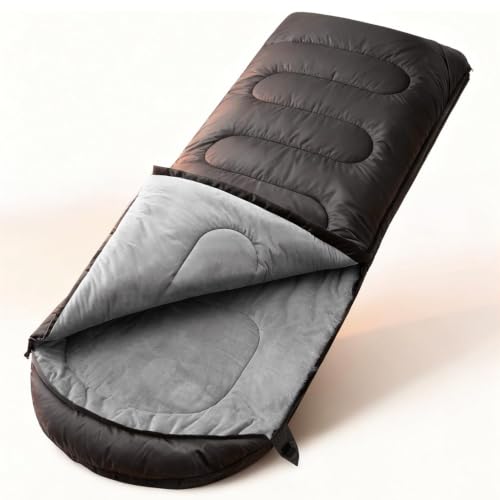
- Each Winter Sleeping Bag measures 86.6 by 32.68 inches; Ideal for Most Users...
- Instant Warmth — No More Cold Shock — If you always feel cold at night, you...
- Full Plush Coverage — Warm on Every Side — Some bags only line the top...
Why a 20-Degree Inaccuracy Can Ruin Your Night (and Your Trip)
I learned this lesson the hard way on a backpacking trip in the Sierra Nevada. My brand-new sleeping bag said it was rated for 20°F, so I felt confident heading into a chilly October night.
By 2 AM, I was shaking uncontrollably. I had to get up, put on every piece of clothing I owned, and do jumping jacks just to warm up enough to fall back asleep.
The Difference Between “Survival” and “Comfort”
Most sleeping bag manufacturers test for survival, not comfort. A 20°F bag means you will likely survive at 20°F, but you will be miserable.
In my experience, comfort is usually 10 to 15 degrees warmer than the rating. If it says 20°F, expect to be cozy only down to 35°F.
Why Your Sleeping Pad Matters More Than You Think
The ground sucks heat right out of your body. I once slept on a cheap foam pad with a good bag and still froze my backside off.
You lose most of your heat through compression. If your pad has a low R-value, your bag’s rating becomes almost meaningless.
How Your Body Chemistry Changes the Numbers
I sleep cold, which means I need a bag rated 15 degrees lower than my husband needs. We can use the exact same bag and have completely different experiences.
Factors like metabolism, hydration, and even what you ate for dinner all play a role. A tired, hungry hiker will feel the cold much faster than someone who is well-fed and rested.
How I Finally Got the Temperature Rating Right for My Family
After that freezing night in the Sierras, I started testing bags with my kids on our backyard camping trips. I wanted to find a reliable way to know if a bag would actually keep us warm.
What I found is that most manufacturers are honest, but their testing conditions are nothing like real life. They test in a lab with a brand new bag, a perfect pad, and a person wearing thermal underwear.
The Simple “Add 15 Degrees” Rule
Honestly, this is what worked for us. I now add 15 degrees to every temperature rating when choosing a bag for comfort.
If the tag says 20°F, I plan for 35°F. If the tag says 0°F, I plan for 15°F. This simple trick has saved me from countless cold nights.
What I Do for My Kids’ Bags
Children lose heat faster than adults, so I am even more careful with their bags. I add a full 20 degrees to their ratings.
For my 8-year-old, a bag rated for 30°F only gets used when the temperature stays above 50°F. I learned this after finding him shivering in his sleeping bag at a family campout.
You know that sinking feeling when you are lying awake at 3 AM, teeth chattering, wondering if you made a huge mistake with your gear investment? That is exactly why I switched to what my neighbor recommended for his scouts and never looked back.
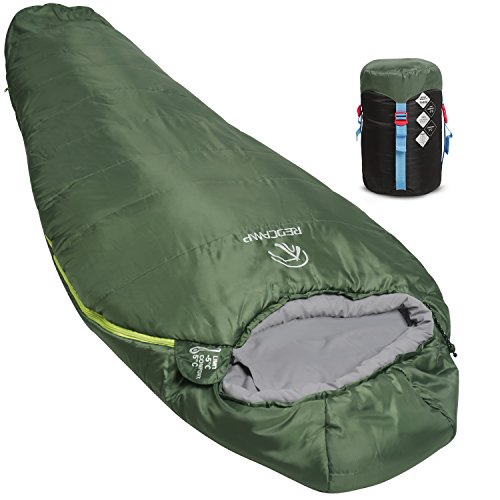
- ✔SUITABLE: The Green and Wine colored mummy sleeping bags for backpacking are...
- ✔EXTRA WARMTH: The soft cotton filling ensures you to keep you warm for...
- ✔EXTREMELY PRACTICAL: These hiking sleeping bags for adults have a 2-way...
What I Look for When Buying a Sleeping Bag for Cold Weather
After years of trial and error, I stopped trusting the tag and started looking at three specific things. These details tell me more than any temperature number ever could.
The Fill Power and Type
Down insulation is lighter and packs smaller, but it is useless when wet. Synthetic fill keeps you warm even if damp, which is why I choose it for my kids.
For fill power, anything above 600 is good for most camping. I look for 650 or higher for backpacking trips where weight matters.
The Draft Collar and Hood Design
A bag without a good draft collar will let warm air escape every time you move. I learned this after waking up with cold shoulders on a 40°F night.
The hood should cinch down tight around your face, leaving only your nose and mouth exposed. I always test this by wiggling around in the store to see if the hood stays put.
The Zipper Quality
A cheap zipper will snag, break, or let cold air seep through the teeth. I have had a zipper fail at 2 AM, and I will never risk that again.
Look for a zipper that is baffled, meaning there is a strip of insulation behind it. I also prefer bags with a full-length zipper so I can vent if I get too warm.
The Shape and Cut
Mummy bags are warmer because they have less air space to heat up. But they feel restrictive, so my wife prefers a semi-rectangular bag for comfort.
I always check the shoulder and hip girth measurements. A bag that is too tight will compress your insulation and make you colder, not warmer.
The Mistake I See People Make With Temperature Ratings
I wish someone had told me this earlier: most people buy a bag based on the coldest temperature they might see, not the average. They look at a forecast that says 20°F and grab a 20°F bag, thinking they are set.
That is exactly what I did on my first winter trip. I ended up wearing my puffy jacket inside the bag and still could not stop shivering.
The real trick is to buy for the temperature you will actually sleep in, which is usually warmer than the low. I now aim for a bag rated 15 degrees colder than the forecasted low, so I can sleep comfortably without extra layers.
Another common mistake is ignoring the bag’s shape. A rectangular bag might say 30°F, but in my experience, it feels more like 45°F because there is too much empty space to heat up.
You know that frustration of spending good money on a bag that still leaves you shivering at 3 AM? That is exactly why I finally grabbed what my camping buddy swore by for his family and stopped guessing.

- XXL SIZE FOR EXTRA SPACE:Measuring 90" x 39", this oversized sleeping bag fits...
- TEMPERATURE RATING:Designed for cold weather camping with a 30°F comfort...
- SOFT COTTON FLANNEL LINING:Features a 100% cotton flannel lining for a soft...
The Liner Trick That Changed How I Camp in Cold Weather
Here is the “aha” moment I wish I had years ago: use a sleeping bag liner to fix a bag that runs cold. A simple fleece or silk liner can add 10 to 15 degrees of warmth instantly.
I tested this on a 35°F night with my 40°F-rated bag. With the liner, I slept warm and comfortable. Without it, I would have been up all night adjusting my layers.
The best part is that liners are cheap compared to buying a whole new bag. I keep a fleece liner in my gear closet for those trips where the forecast looks colder than expected.
You can also use a liner to protect your bag from sweat and dirt. This means you wash the liner instead of the bag, which keeps your insulation fluffy and effective for years longer.
Another trick I swear by is pairing a liner with a bivy sack for extra wind protection. On windy nights, a bivy can add another 5 to 10 degrees of warmth by blocking drafts that sneak through your bag’s shell.
My Top Picks for Sleeping Bags That Handle Real Cold Weather
Coleman North Rim 0°F Sleeping Bag Cold-Weather Mummy — The Reliable Workhorse for Family Camping
The Coleman North Rim 0°F Sleeping Bag is what I grab for car camping trips where I know the temperature will drop. I love that it has a thermolock draft tube and a hood that actually cinches tight around my face.
It is perfect for families who camp close to the car and want a bag that will not break the bank. The honest trade-off is that it is heavy and bulky, so you do not want to backpack with this one.

- Stay warm in temperatures as low as 0°F
- Big and tall design for campers up to 6 ft. 2 in
- Thermolock draft tube keeps body heat from escaping through the zipper
NewDoar Ultralight Backpacking Sleeping Bag 50-70°F 1.5lbs — My Go-To for Warm Weather and Summer Trips
The NewDoar Ultralight Backpacking Sleeping Bag weighs only 1.5 pounds, which makes it my first choice for backpacking in summer. I appreciate that it compresses down small enough to fit in my pack without taking up much space.
This bag is ideal for hikers who need to save weight and are camping in temperatures above 50°F. The honest trade-off is that it is not built for cold weather, so check the forecast before you pack it.
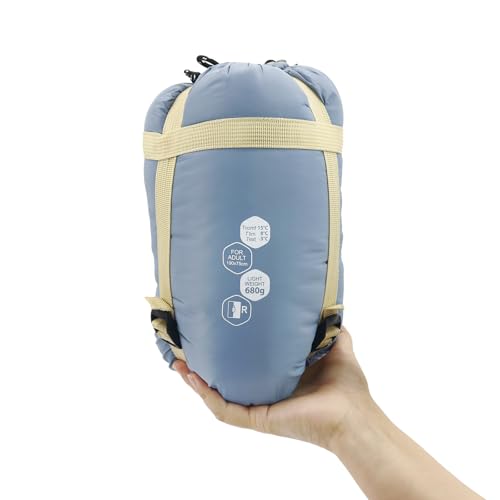
- [Ultra-Lightweight Backpacking Essential]-Weighing only 1.5lbs, NewDoar's...
- [Three-Season Comfort (50°F-70°F / 10°C-21°C)] – Stay warm and comfortable...
- [Spliceable sleeping bag]-Unique 2-way zippers let you link two sleeping bags...
Conclusion
The temperature rating on your sleeping bag is just a starting point, not a promise. Always plan for 10 to 15 degrees warmer than the tag says.
Go grab your sleeping bag right now and check the rating against the coldest trip you have planned. Add that 15-degree buffer to your packing list tonight so you never spend another night shivering in the dark.
Frequently Asked Questions about How Inaccurate is the Temperature Rating on My Sleeping Bag for Cold Weather?
How much warmer should I expect my sleeping bag to feel than its rating?
In my experience, most sleeping bags feel about 10 to 15 degrees warmer than their rating for comfort. A 20°F bag usually keeps me cozy down to about 35°F.
The exact number depends on your sleeping pad, your tent, and your own metabolism. I always test a new bag in my backyard before taking it on a real trip.
Does the EN 13537 standard actually help me choose a better bag?
Yes, but only if you know how to read it. The standard gives you a “comfort” rating and a “lower limit” rating, and most people need the comfort number.
The lower limit is for survival, not sleep. I always look for the comfort rating and use that as my real-world guide for choosing a bag.
What is the best sleeping bag for cold weather camping when I sleep cold?
If you sleep cold like I do, you need a bag rated at least 20 degrees colder than the forecasted low. I have found that the Coleman North Rim 0°F bag worked for me even on nights that dipped into the teens.
This bag has a thick draft tube and a well-designed hood that traps heat effectively. It is heavy, but for car camping it is worth the extra weight for the warmth.

- ⛰️【3-Season Comfort & Versatile Outdoor Use】Engineered for spring...
- ⛰️【Spacious Envelope Design & Thoughtful Details】This envelope-style...
- ⛰️【Ultra-Compact Fold & Effortless Portability】With a generous size of...
Can I use a liner to fix a sleeping bag that is not warm enough?
Absolutely. A fleece liner can add 10 to 15 degrees of warmth to any bag. I use one with my summer bag to extend its range into early fall.
Liners are also easier to wash than the bag itself. This keeps your insulation working well for many more seasons.
Which sleeping bag won’t let me down when the temperature drops unexpectedly?
For unpredictable weather, I trust a bag with a conservative rating and a hood that cinches tight. The NewDoar Ultralight is what I grab for summer trips where I need to pack light but still want peace of mind.
It is not built for deep cold, but for 50°F and above it is reliable. I always pair it with a liner for extra insurance on cooler nights.

- Stay warm in temperatures as low as 30°F
- For campers up to 5 ft. 11 in.
- Thermolock draft tube along the zipper keeps body heat from escaping
Why does my sleeping bag feel colder than its rating says it should?
Most likely you are losing heat to the ground through a thin sleeping pad. Your bag only insulates the top of your body, so a pad with low R-value will make you cold.
Another reason is that you might be wearing too many clothes inside the bag. Tight layers compress the insulation and reduce its ability to trap warm air.