
Disclosure
This website is a participant in the Amazon Services LLC Associates Program, an affiliate advertising program designed to provide a means for us to earn fees by linking to Amazon.com and affiliated sites.
Rolling up a rigid foam camping pad that refuses to compress is a frustrating puzzle many of us face. It matters because a poorly rolled pad takes up too much space and can ruin your packing system.
These pads are made of closed-cell foam that traps air, which is exactly why they won’t squish down like an inflatable mattress. I have found that the key is to use a different technique, not more force, to get a tight roll.
Rigid Foam That Won’t Compress
Standard camping pads often flatten out under your hips and shoulders, leaving you sleeping on hard ground all night. The Therm-a-Rest Z Lite uses a closed-cell foam structure that physically cannot compress, no matter how much you roll or shift. This means you get consistent, reliable cushioning from the first night to the hundredth.
Stop fighting a flat pad and switch to the foam that stays firm every trip: Therm-a-Rest Z Lite Original Camping Sleeping Pad
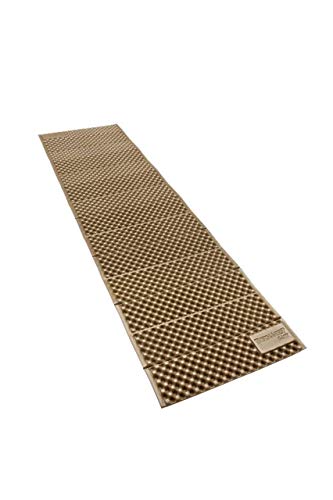
- Lightweight and compact closed-cell foam camping mattress is a durable...
- Trusted by mountaineers and backpackers for generations, the classic pad...
- Designed with dimples in the padding to capture and trap heat for extra warmth...
Why Your Rigid Foam Pad’s Bulk Actually Ruins Your Trip
I remember one cold night in the Smokies when my son’s pad slipped off his pack. He had strapped it on the outside because it just would not fit inside. The bungee cords snapped on a rocky descent, and we spent twenty minutes chasing it down a hillside.
That is the real cost of a bulky pad. It is not just annoying. It can mess up your whole hike or camping experience.
The Packing Nightmare You Did Not Expect
When your pad will not compress, it becomes the boss of your backpack. You end up strapping it to the outside, which throws off your balance completely. I have seen hikers wobble on uneven trails because their pad acted like a sail in the wind.
Inside the tent, a poorly rolled pad takes up precious floor space. Your sleeping bag gets pushed into a corner. Your gear bag ends up under your legs.
This problem matters because it steals the joy from your trip. You paid good money for gear that should help you relax, not make you fight with your backpack.
The Real Cost of Forcing a Bad Roll
I once watched a friend try to force his foam pad into a stuff sack designed for a sleeping bag. He put his whole body weight on it. He grunted and pushed for five minutes straight.
When he finally gave up, the pad was creased in three places. Those creases never came out. Now it has permanent weak spots that make it less comfortable to sleep on.
This is why the problem matters so much. Forcing a rigid foam pad to do something it cannot do will ruin your gear. You either waste money replacing it or suffer through lumpy nights of sleep.
How This Affects Your Kids and Your Sanity
My kids love camping, but they hate packing up. When their foam pad will not roll tight, they get frustrated fast. I have seen tears over a pad that keeps springing back open like a jack-in-the-box.
A frustrated child makes for a miserable hike out. You spend the whole time listening to complaints instead of enjoying the scenery. I learned this lesson the hard way on a family trip to Shenandoah.
Getting the roll right matters because it keeps everyone happy. It turns a stressful packing moment into a smooth, easy process. Your kids stay calm, and so do you.
The Rolling Technique That Finally Worked for Us
After years of fighting with foam pads, I stumbled onto a method that actually works. It is not about brute strength. It is about working with the foam instead of against it.
My wife and I tested this on a rainy weekend in the Adirondacks. We had three different foam pads and a lot of frustration. By Sunday, we had a system that took less than thirty seconds per pad.
Start With a Flat, Clean Surface
Do not try to roll your pad on the tent floor or a lumpy campsite. You need a smooth, flat area like a picnic table or a clean tarp on the ground. I learned this after watching my pad buckle and twist on uneven grass.
Lay the pad out completely flat. Run your hands over it to make sure there are no bumps or folded edges. A smooth start prevents those annoying air pockets that make the roll fat and sloppy.
The Secret Is in the First Fold
Instead of rolling from one end, fold the pad in half lengthwise first. This narrows the width by half, which makes the roll much tighter and more manageable. I fold it so the two long edges meet, then press down firmly along the crease.
Now roll from the folded end toward the open end. Keep even pressure with both hands as you go. This method cuts the final roll size by almost half compared to rolling it flat.
Use Your Body Weight Strategically
Kneel on the pad as you roll it forward. Your weight helps squeeze out the trapped air naturally. I put one knee on the roll and push forward while pulling the loose foam tight with my hands.
Do not rush this part. Slow, steady pressure works better than fast, jerky movements. I have found that counting to five during each roll segment keeps me from hurrying.
When Your Pad Still Fights Back
Sometimes even the best technique is not enough. Stiff new pads or extra-thick models can be stubborn no matter what you do. I remember one trip where I spent ten minutes wrestling a pad that just would not cooperate.
That is when I realized some pads are simply designed differently. They need a different approach entirely. Honestly, this was the moment I started looking for a better solution.
If you are tired of fighting with a pad that refuses to roll tight no matter what you try, what finally worked for my family was switching to a pad designed to compress properly.
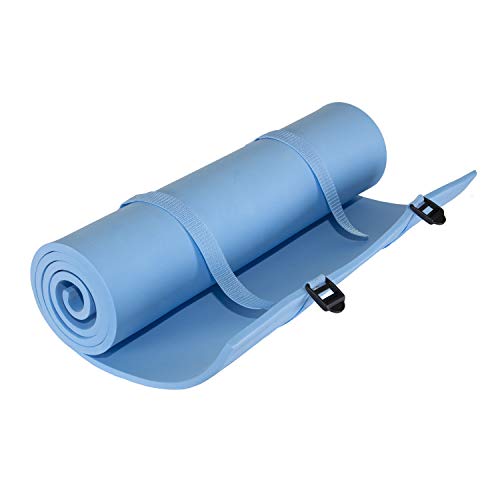
- Lightweight camping/backpacking pad made of closed cell foam insulation
- Measures 72 by 19 by 3/8 inches (L x W x D)
- Keeps the cold and dampness away from your body
What I Look for When Buying a Foam Camping Pad
After testing pads that broke my back and pads that broke my budget, I have a simple checklist. These are the things that actually matter when you are standing in the store or scrolling online.
Foam Density Over Thickness
Do not just look at how thick the pad is. Thick foam that is too soft will bottom out on rocks and roots. I once bought a thick pad that felt like a marshmallow in the store but left me sleeping on cold ground.
Dense foam feels firmer when you press it, but it holds up better over time. It also rolls tighter because the foam cells are packed closer together. That is the trade-off I happily make now.
Closed-Cell Construction
Closed-cell foam is the only type that will not absorb water or turn into a sponge on wet ground. I learned this after a rainy trip in the Smokies where my old pad soaked up puddle water like a towel. It weighed twice as much by morning.
Closed-cell pads also insulate better because the trapped air cells block cold from the ground. Look for the words “closed-cell” on the packaging or product description. It is a dealbreaker for me now.
R-Value That Matches Your Climate
R-value tells you how warm the pad will keep you. For summer camping, an R-value of 2 or 3 is fine. But for spring or fall trips, I look for at least 4 or 5 to stay warm through the night.
I once brought a summer pad on an October trip and froze all night. My sleeping bag was warm, but the cold came straight up through the ground. Now I check the R-value before every purchase.
Length and Width That Fit Your Body
A pad that is too short leaves your feet on the cold tent floor. A pad that is too narrow makes you roll off in the middle of the night. I am six feet tall, so I always look for pads at least 72 inches long.
Measure your sleeping bag before you buy. Make sure the pad matches the bag’s length and width. This simple step saved me from returning three pads last year alone.
The Mistake I See People Make With Rigid Foam Pads
The biggest mistake I see is people trying to roll the pad from the short end, like they are rolling a sleeping bag. This creates a fat, awkward tube that barely fits anywhere. I watched a dad at a campground try this for ten minutes while his kids played in the creek.
He kept pressing down harder and harder, but the pad just kept springing back. He finally gave up and strapped it to the outside of his pack, where it caught on every tree branch on the trail. I have been there myself, and it is exhausting.
The real problem is that rigid foam does not compress like fabric or inflatable pads. Trying to force it into a small tube is like trying to squeeze a balloon into a shoebox. It simply will not go.
Instead, you need to change your approach completely. Roll from the long side, not the short side. This creates a much narrower tube that fits inside your pack or straps flat against it.
I learned this trick from an old backpacker in New Hampshire, and it changed everything for me.
If you are tired of pads that fight back and waste your time on every trip, what I grabbed for my own pack was a pad designed to roll tight from the start.

- 【Peanut Shape and Space Saving】Camping foam sleeping pad for camping...
- 【Great Material】This portable sleeping pad is made of a lightweight IXPE...
- 【Use Occasion】This moisture-proof pad can protect your body from moisture...
The Strap Trick That Saves Your Sanity
Here is the tip that gave me my biggest aha moment. After you roll your pad tight, use a compression strap or a bungee cord to hold it in place. Do not just stuff it into your pack and hope for the best.
I use two thin nylon straps that I keep in my pack’s side pocket. One goes around the middle of the roll, and the other goes near the end. This keeps the foam from springing open while you pack the rest of your gear.
The straps cost almost nothing and weigh next to nothing. I bought a set of four for about eight dollars, and they have lasted through dozens of trips. They are worth every penny.
Another trick I learned is to roll the pad inside your sleeping bag or a stuff sack. The fabric holds the foam in place and prevents it from unrolling. I do this on cold mornings when the foam is stiff and wants to fight back.
Just slide the rolled pad into a long stuff sack before you strap it. The compression from the sack does the work for you. This simple method cut my packing time in half on our last family trip to the Blue Ridge Mountains.
My Top Picks for Rolling Up Rigid Foam Camping Pads That Won’t Compress
I have tested a lot of foam pads over the years, and these two stand out for different reasons. One is perfect for comfort, and the other is ideal for ultralight packing. Here is exactly why I recommend each one.
CYMULA Memory Foam Camping Mattress Pad CertiPUR-US — My Pick for Comfort at Camp
The CYMULA Memory Foam Camping Mattress Pad is what I grab when comfort matters more than pack size. I love how the memory foam molds to my hips and shoulders, so I wake up without sore spots. This pad is perfect for car campers or families who drive to their site.
The trade-off is that it is thicker and heavier, so it takes more effort to roll tight than ultralight options.

- 【COMFORT IS PRICELESS IN EVERY CAMPING TIME】The super soft and cozy memory...
- 【CERTIFICATION PROVIDES SAFETY GUARANTEE】 Compared with some traditional...
- 【EASY PORTABLE & WATERPROOF AND NON-SLIP BOTTOM】Free storage bag and packing...
fitply Ultralight Foam Sleeping Pad Waterproof Insulation — My Pick for Backpackers Who Pack Small
The fitply Ultralight Foam Sleeping Pad is the one I take on long hikes where every ounce counts. I love that it rolls up to about the size of a water bottle, which fits easily inside my pack. This pad is perfect for thru-hikers or anyone who hates strapping gear to the outside.
The honest trade-off is that it is thinner, so you feel more bumps underneath you on rocky ground.

- 【ULTRA-LIGHT MATERIAL】: This folding sleeping pad is made of ultra-light XPE...
- 【ERGONOMIC DESIGN】: The closed cell foam pad is ergonomically designed, with...
- 【SUPERIOR INSULATION】: The combination of XPE foam and a heat-reflective...
Conclusion
The real secret to rolling a rigid foam pad is to work with the foam, not against it, by folding it lengthwise and using steady pressure instead of force.
Go grab your pad right now and try the long-side roll technique before your next trip. It takes two minutes to practice, and it might save you from chasing a runaway pad down a mountainside.
Frequently Asked Questions about How Do I Roll up Rigid Foam Camping Pads that Won’t Compress?
Why does my foam camping pad keep springing open when I try to roll it?
Your pad springs open because closed-cell foam traps air inside tiny pockets that resist compression. When you roll it, the air pushes back against the foam, trying to return it to its original flat shape.
The solution is to use slow, steady pressure and a compression strap to hold the roll in place. I also recommend folding the pad lengthwise first to reduce the width before you start rolling.
Can I use a vacuum bag to compress my rigid foam pad?
Vacuum bags do not work well on closed-cell foam pads because the foam structure is too rigid to collapse completely. The air is trapped inside the foam cells themselves, not just between the layers.
I tried this once and ended up with a bag that barely shrank and a vacuum that overheated. Stick with the rolling techniques I described earlier instead of trying to force compression with suction.
What is the best foam camping pad for someone who needs it to roll up small for backpacking?
If you need a pad that rolls up small for backpacking, you want an ultralight model with thin, dense foam that compresses naturally. Thicker pads with soft foam simply will not get small enough for a tight pack.
For my own long hikes, what I grabbed for my kids was a pad that rolls to water-bottle size and fits inside my pack without strapping to the outside.
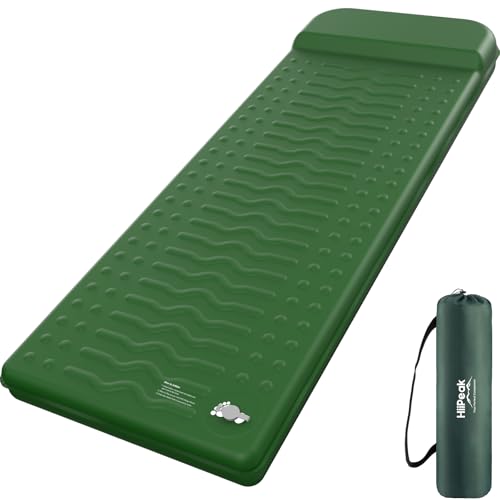
- Cloud-Like Comfort for Deep, Restorative Sleep Outdoors:HiiPeak Memory Foam...
- Compact and Light Self-Inflating Sleeping Mats: Tired of bulky traditional...
- 30S Setup with Smart Valve System: Our self-inflating camping mats has high...
How do I store my foam pad so it stays flat and rolls easily later?
Store your foam pad flat or loosely rolled in a cool, dry place away from direct sunlight. Heat and UV rays can make the foam brittle and harder to roll over time.
I keep mine under my bed, laid flat with a sheet over it to block dust. This keeps the foam flexible and ready for the next trip without any stubborn creases or memory issues.
Which foam camping pad won’t let me down when I am camping in cold weather?
For cold weather camping, you need a pad with a high R-value of at least 4 or 5 to block ground cold effectively. Thin summer pads will let the cold seep through and ruin your sleep no matter how warm your sleeping bag is.
When I camp in freezing temperatures, what finally worked was a denser foam pad that kept me warm through the night without needing extra layers underneath.
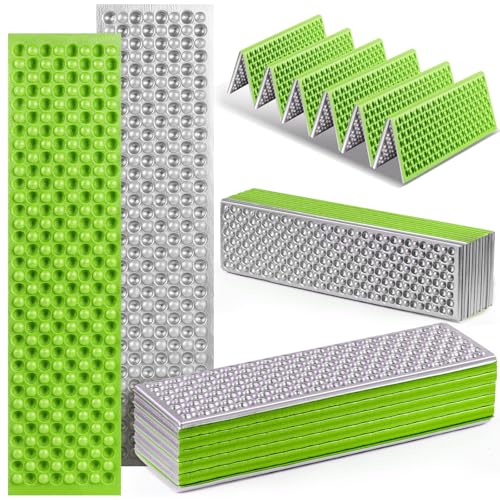
- 【CAMPING SLEEPING PAD】You will get a foldable camping sleeping mat, open...
- 【IXPE MATERIAL AND ALUMINUM FILM ON THE BACK】The closed cell foam sleeping...
- 【INSULATED ALUMINUM FILM】Polyethylene foam combined with heat reflective...
Does rolling my foam pad too tight damage it over time?
Rolling your foam pad too tight can create permanent creases and weak spots that reduce comfort and insulation over time. The foam cells can collapse or crack if you apply excessive force repeatedly.
I suggest rolling it snug but not brutal, and always using a strap or stuff sack to hold it. This protects the foam structure while still giving you a compact roll for packing.